Hack the North 2026 & Me
Tinkerly
spatial computing
hardware tooling
Project overview
Vibe-code hardware, then build it in a scanned 3D workspace
Turns hardware ideas into circuits, firmware, and printable parts, then brings the workbench into 3D with Gaussian splats, object detection, and guided assembly.
Role
- Full-stack development
- spatial computing
- hardware tooling
- simulation
- AI workflows
- interface design
Date
September 2026
Field
Full-stack
Stack
TypeScript, React, three.js, Gaussian splatting, COLMAP, Brush, Rapier, Manifold, Backboard, avr8js
Backboard track winner
Hack the North semifinalist
5 connected build stages
Context
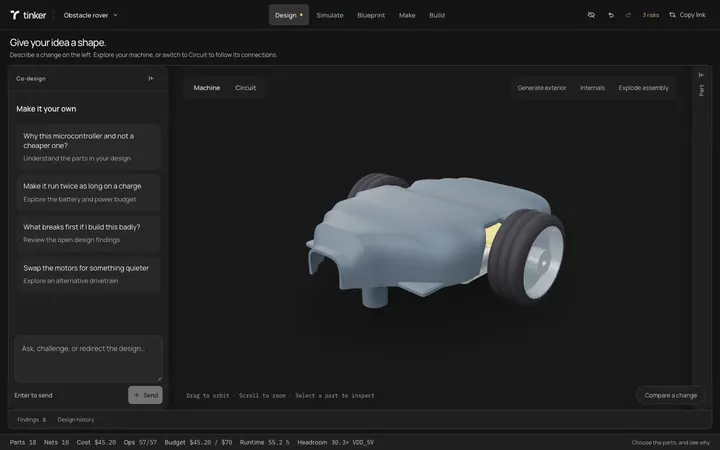
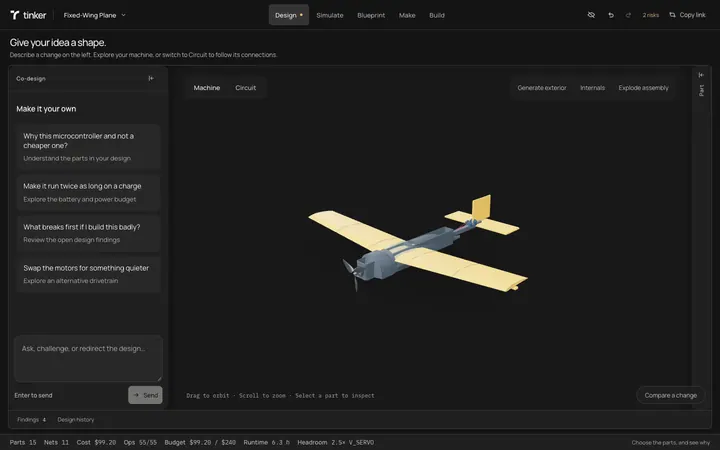
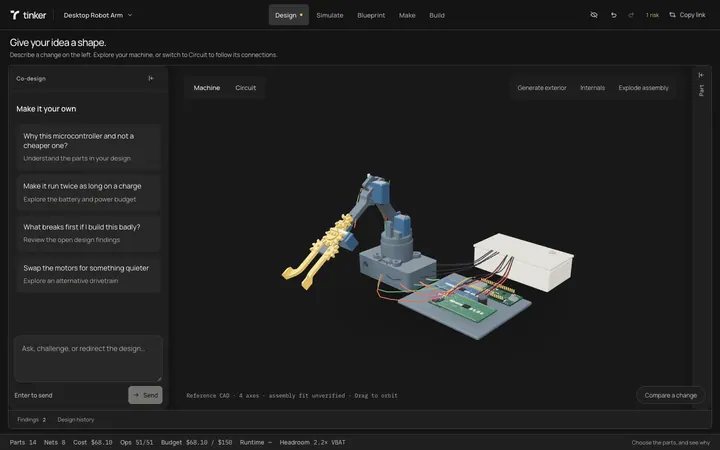
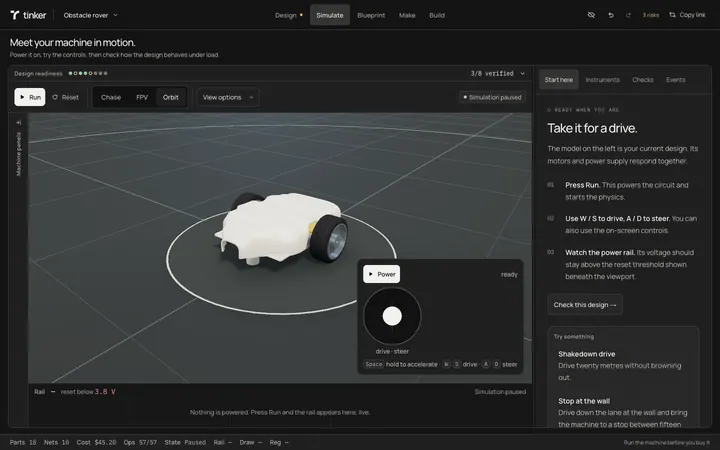
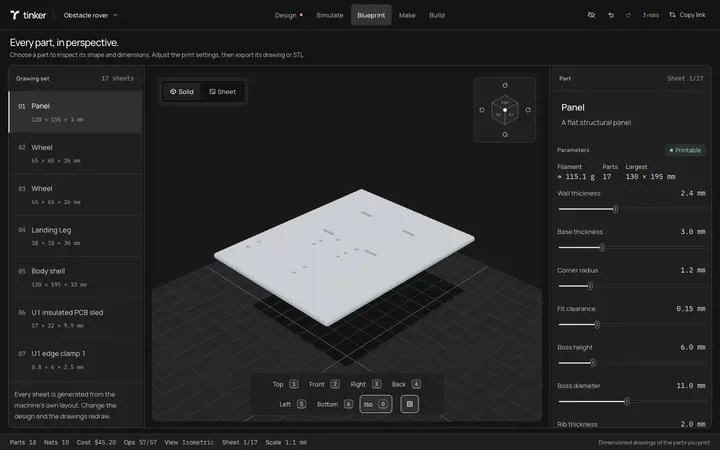
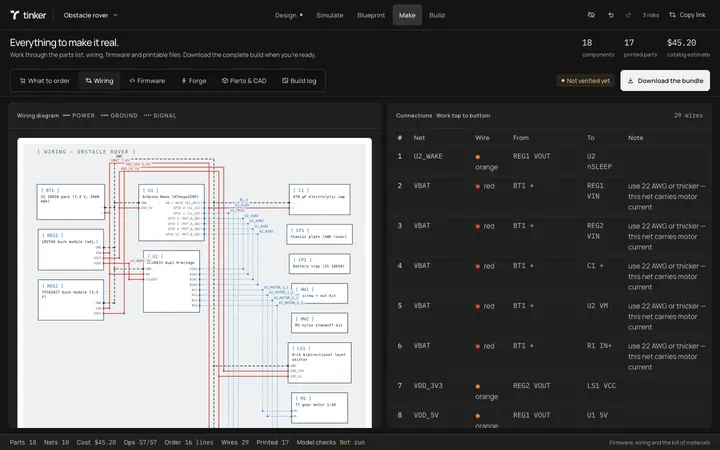
Built for Hack the North 2026. A dark, interactive workbench connects AI-assisted hardware design to the physical bench. One shared graph drives the circuit, 3D assembly, bill of materials, board pin map, and generated firmware.
Tinkerly
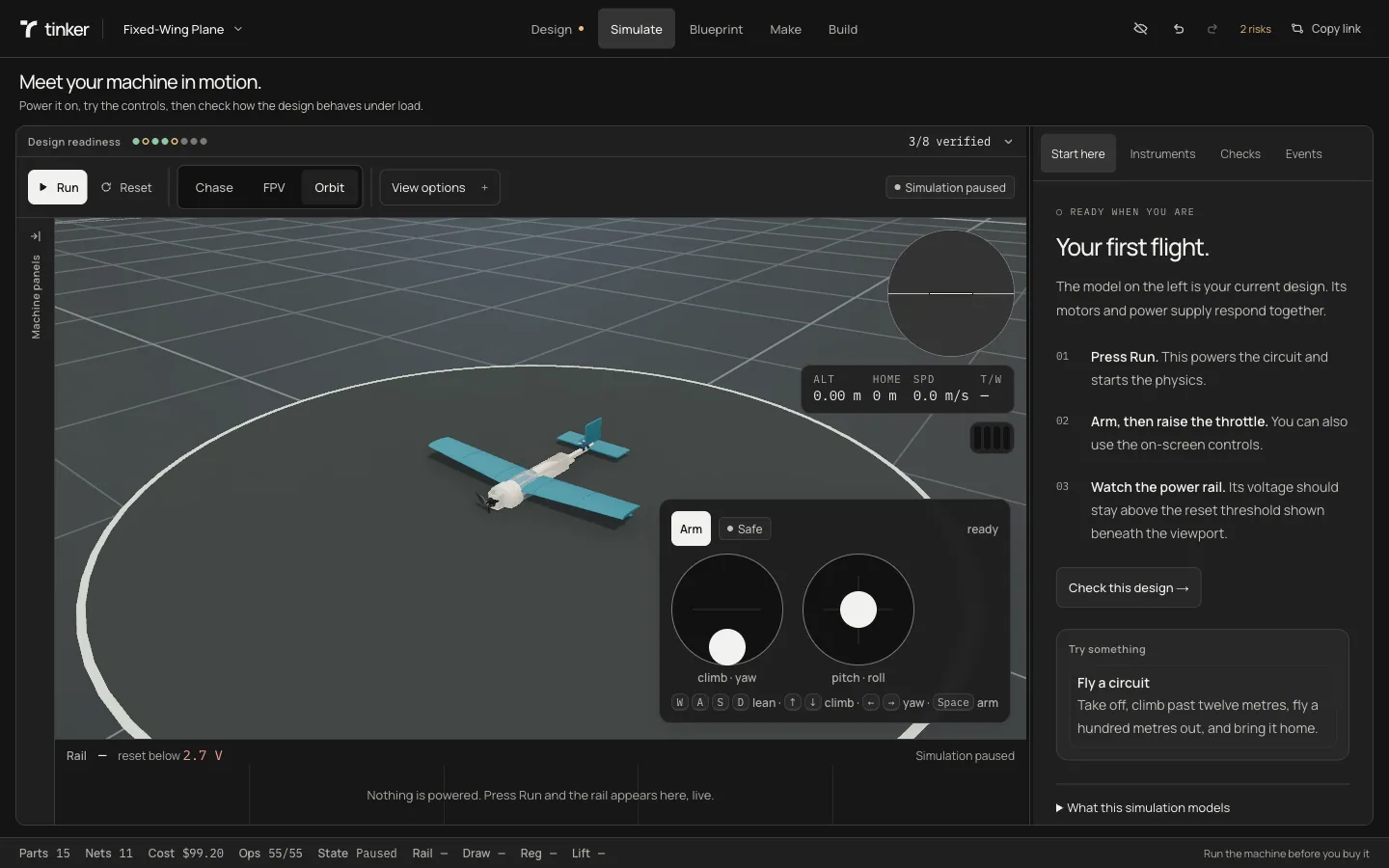
A hardware build spans CAD, wiring diagrams, firmware, and the parts on your desk.
The hard part
Keeping those views connected makes it easier to understand what a change affects and what to test next.
What it took
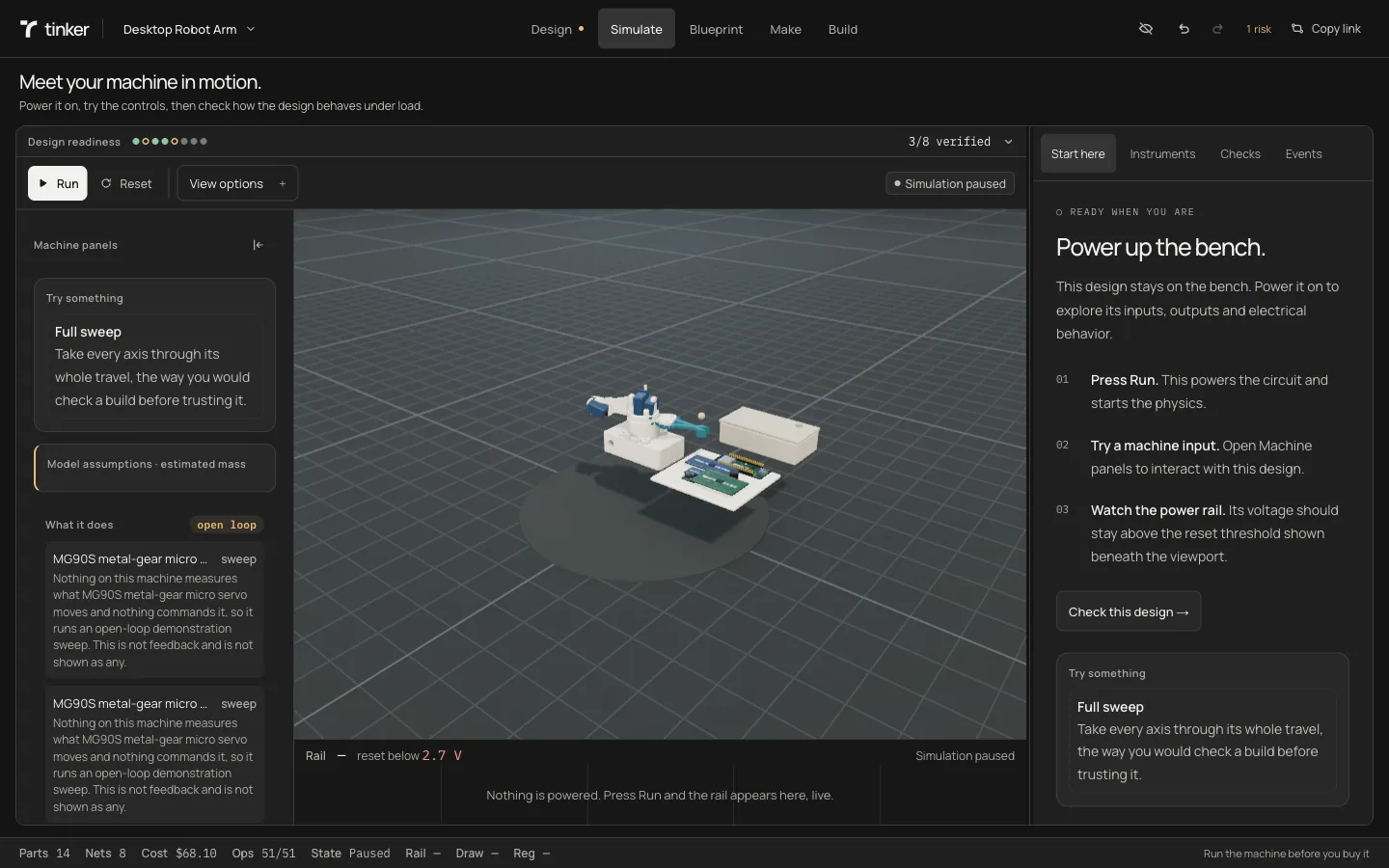
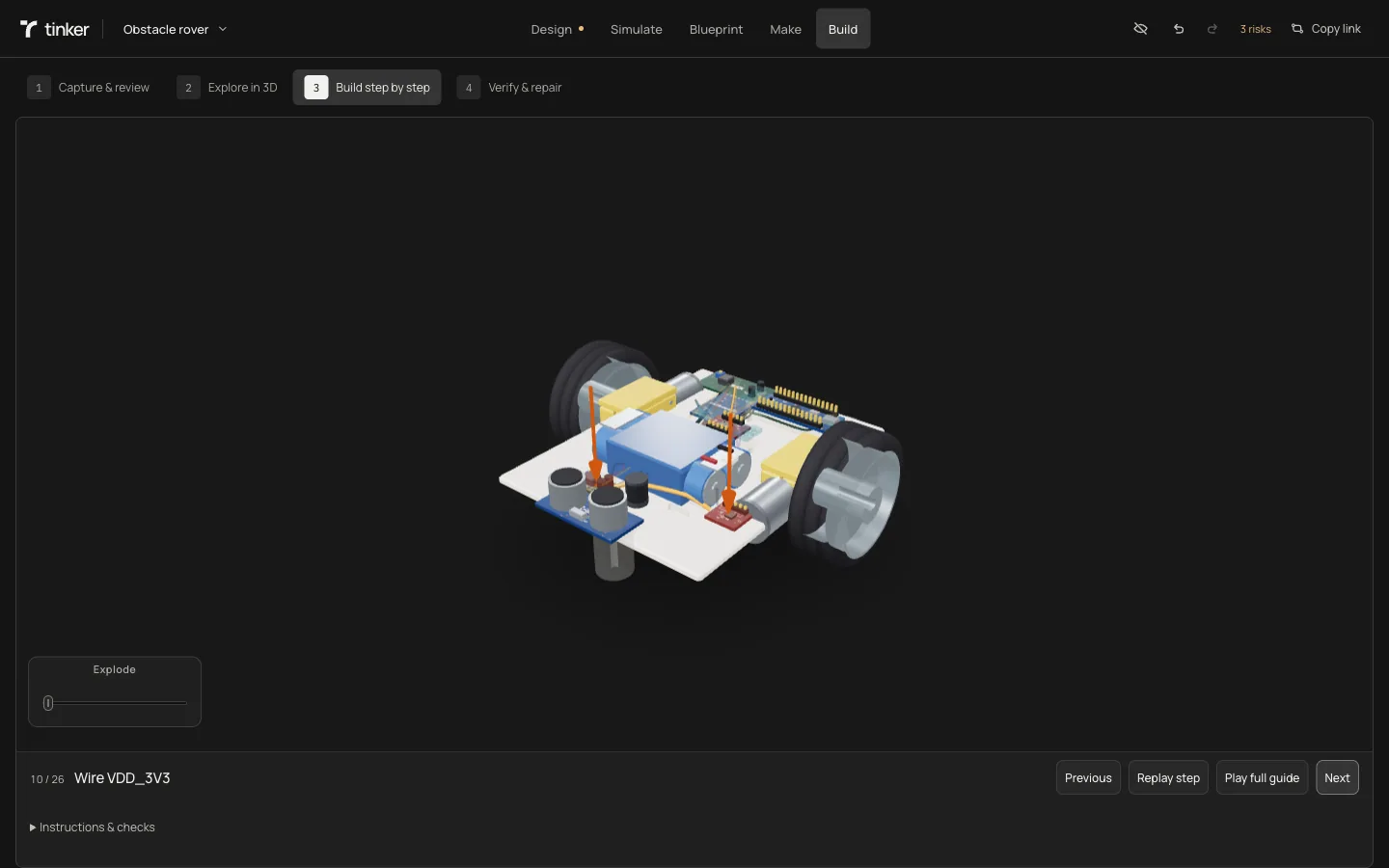
- Kept circuits, printed geometry, wiring, and firmware tied to one editable design graph, with deterministic checks for power, voltage, and pin allocation.
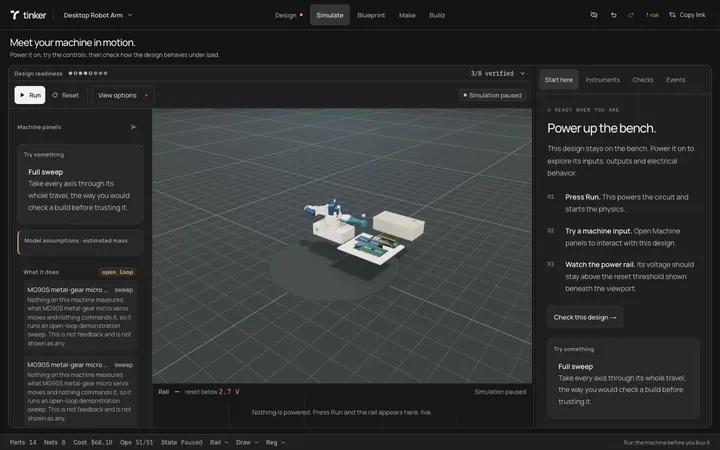
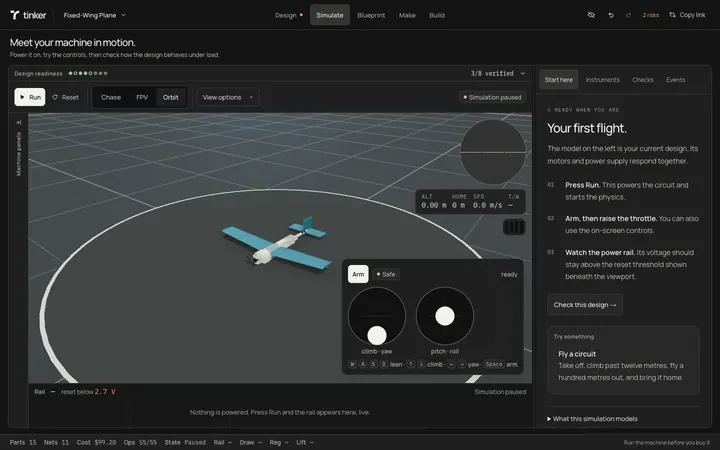
- Compiled firmware for supported Arduino and ESP32 targets, with an AVR twin that executes compiled code against electrical and motion models.
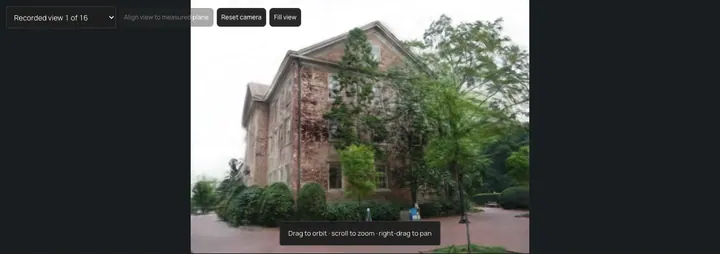
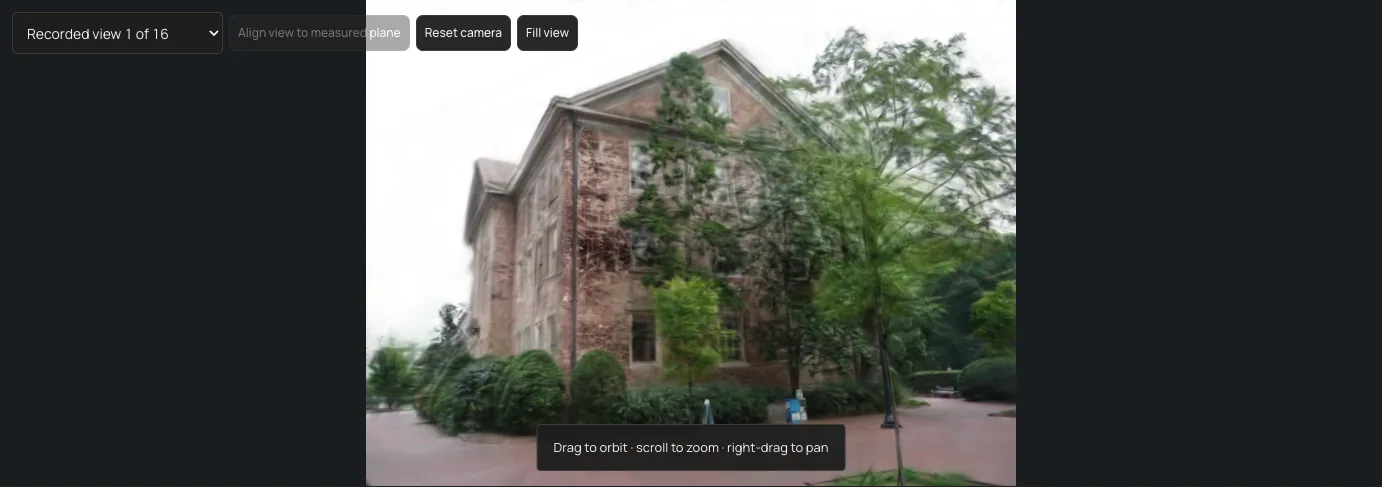
- Reconstructed captured views with COLMAP and Brush into explorable Gaussian-splat scenes, with recorded camera viewpoints and a persistent scan library.
- Added vision-assisted object detection across camera, photo, and scan views, refining bounds against image pixels and letting users review part identities and 3D regions.
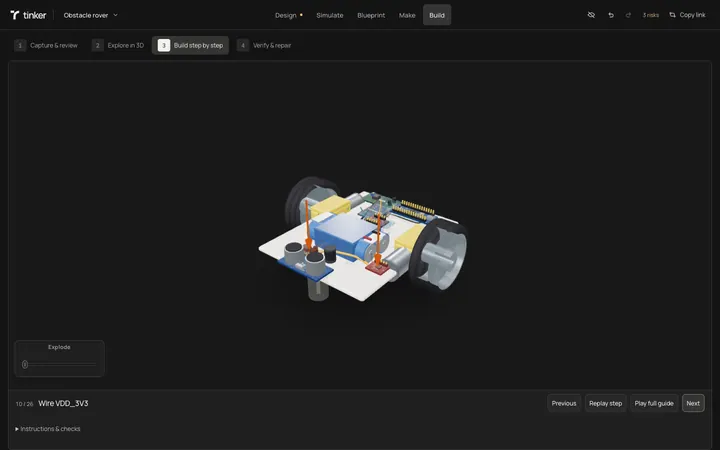
- Connected confirmed parts and measured workspace alignment to step-by-step assembly rehearsal, including pickup paths and captured-object motion.
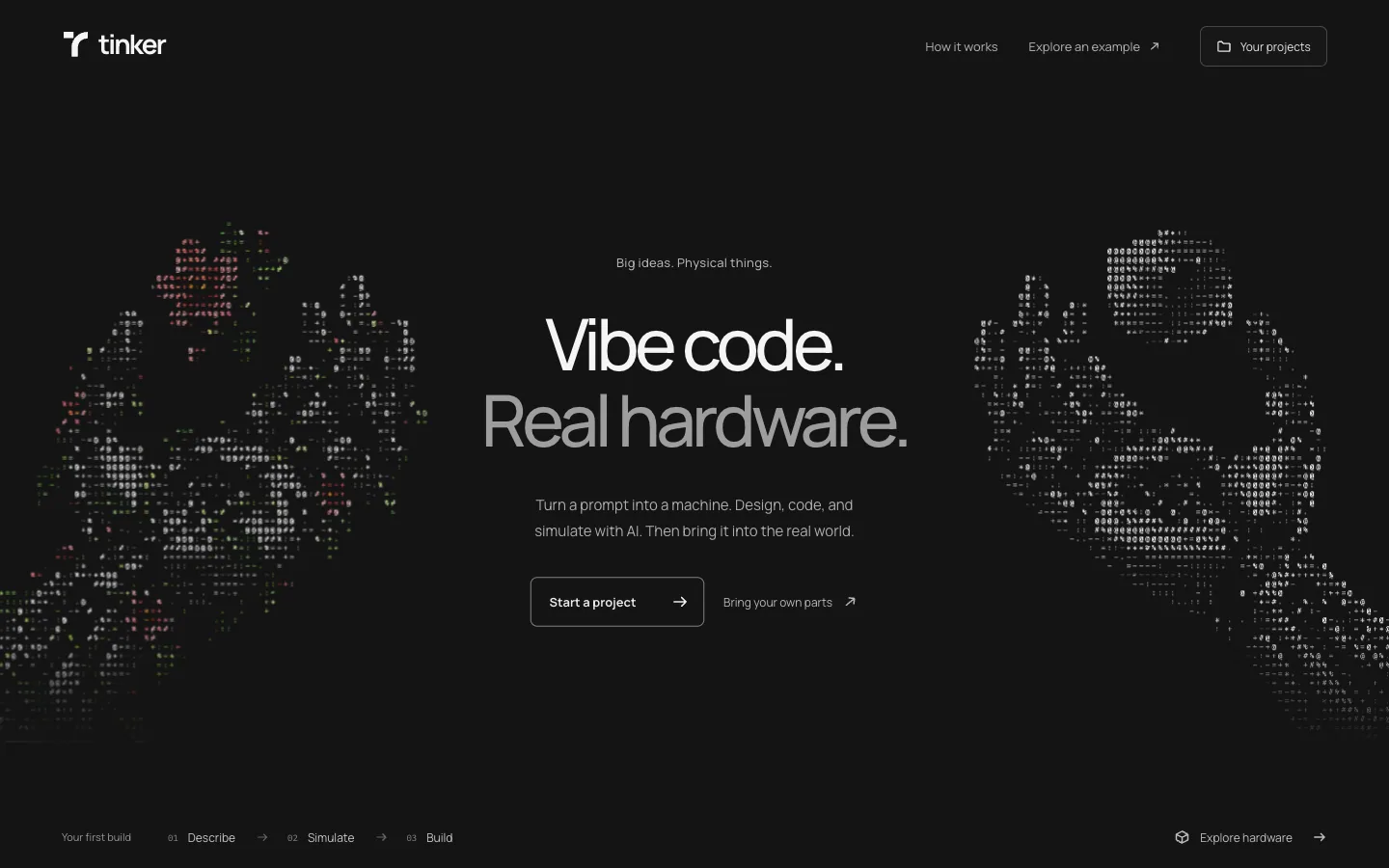
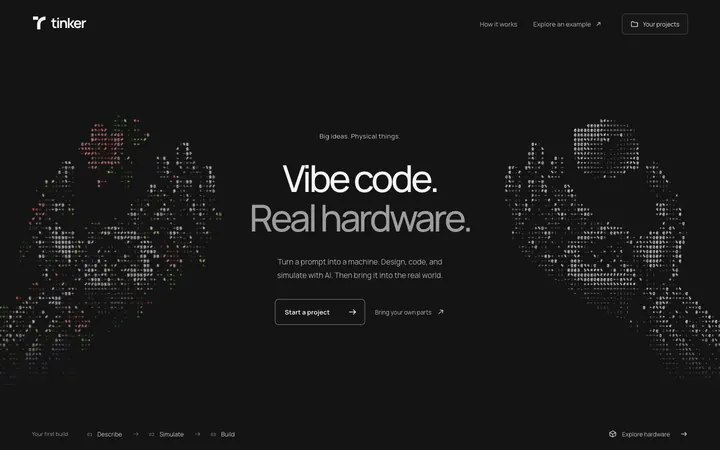
- Built a dark interface with an animated ASCII-art home page, interactive machine and circuit views, dimensioned blueprints, and printable manufacturing geometry.
- Used Backboard to retain project-scoped debugging context across sessions, marking memories from older design revisions as stale.
Outcome
Awards &Recognition
Hack the North 2026
Backboard track winner and semifinalist